
Molekula
Putrescine dihydrochlorure (dihydrochlorure de 1,4-diaminobutane)
Putrescine dihydrochloride (1,4-Diaminobutane dihydrochloride)
Fournisseur de plus de 4 500 clients dans plus de 80 pays
Certifié ISO 9001:2015 & ISO 14001:2015 · Fournisseur de laboratoires et de l'industrie depuis 2000 · Les tailles de conditionnement listées constituent un point de départ — nous fabriquons, approvisionnons et reconditionnons selon la quantité nécessaire.
Le dichlorhydrate de putrescine est un composé diamine (dichlorhydrate de 1,4-diaminobutane) couramment utilisé dans la recherche biochimique, les études de culture cellulaire et comme précurseur dans la synthèse pharmaceutique. Il joue un rôle dans le métabolisme des polyamines et sert de réactif clé dans les dosages et les expériences biochimiques. Ce produit chimique porte le numéro CAS 333-93-7, avec la formule moléculaire NH2(CH2)4NH2 · 2HCl et un poids moléculaire de 161,07. Il est stocké dans des conditions ambiantes mais nécessite une manipulation prudente en raison de sa nature dangereuse, indiquée par la mention d'avertissement « Danger ». Molekula fournit le dichlorhydrate de putrescine, des quantités de recherche aux quantités en vrac, avec une documentation complète et une traçabilité ISO 9001:2015.
Image fournie à titre d'illustration uniquement. D'autres conditionnements et formats sont disponibles.
Prix et formats de conditionnement
Ces tailles d'emballage ne constituent pas une limite. Molekula conçoit, approvisionne et reconditionne sur commande — si vous avez besoin de 500 kg et que vous ne voyez que 1 kg répertorié, Nous fournissons des devis pour des quantités allant de quelques grammes à plusieurs tonnes.
Besoin d'un conditionnement différent ? Ajoutez le format le plus proche et modifiez la taille dans votre panier ; nous appliquons le même tarif unitaire.
-
25 g — £40.40 par emballage HT · £48.48 TTC
Besoin d'une quantité ou d'un conditionnement différent ?
Indiquez-nous les quantités souhaitées et vos délais — fûts, IBC, sacs ou commande en vrac ponctuelle. Nous nous chargerons de la fabrication ou de l'approvisionnement et reviendrons vers vous avec une proposition tarifaire.
Prix hors TVA/taxe de vente et frais de livraison.
Spécifications
| Property | Value |
|---|---|
| Appearance | White to off-white crystalline powder |
| Loss on Drying | <0.5% |
| Solubility | Clear |
| Assay | 97 - 103.0% (dry basis, Titration) |
| Residue on Ignition | <0.2% |
| Heavy Metals (Pb) | <10ppm |
| Arsenic (As) | <10ppm |
| Sulphates (SO4)(2-) | <0.02% |
Stockage et manipulation
| Property | Value |
|---|---|
| Température de stockage | Ambient |
| Point d'inflammation | 45 °C |
| Classe de transport | 8 (6.1) |
| Groupe d'emballage | II |
| Acidité | Neutral |
Usage réservé à la recherche. Ne convient pas à un usage humain.
Identification
| Property | Value |
|---|---|
| SKU | 25523156 |
| Numéro CAS | 333-93-7 |
| Numéro CE | 206-375-9 |
| Formule moléculaire | NH2(CH2)4NH2 · 2HCl |
| Masse moléculaire | 161.07 |
| SMILES | C(CCN)CN.Cl.Cl |
| Numéro ONU | UN2923 |
| Code REACH | Y110 |
| Inscrit au TSCA | Oui |
| Code HTS | 2921.29.0055 |
| Code tarifaire | 2921290090 |
Sécurité et GHS
-
 Corrosive
GHS05
Corrosive
GHS05
-
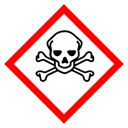 Toxic
GHS06
Toxic
GHS06
Déclarations de danger
- H302 Nocif en cas d'ingestion.
- H311 Toxique par contact cutané.
- H314 (sub cat. 1B) Provoque de graves brûlures de la peau et de graves lésions des yeux.
- H330 Mortel par inhalation.
Déclarations de précaution
- P260 Ne pas respirer les poussières/fumées/gaz/brouillards/vapeurs/aérosols.
- P280 Porter des gants de protection/des vêtements de protection/un équipement de protection des yeux/du visage/une protection auditive/...
- P301+312 EN CAS D'INGESTION : appeler un CENTRE ANTIPOISON/un médecin/.../ en cas de malaise.
- P303+361 En cas de contact avec la peau (ou les cheveux) : Enlever immédiatement tous les vêtements contaminés. Rincer à l'eau ou se doucher.
- P304+340 EN CAS D'INHALATION : transporter la personne à l'extérieur et la maintenir dans une position où elle peut confortablement respirer.
- P305+351+338 EN CAS DE CONTACT AVEC LES YEUX : rincer avec précaution à l'eau pendant plusieurs minutes. Enlever les lentilles de contact si la victime en porte et si elles peuvent être facilement enlevées. Continuer à rincer.
Documents
Fiches de données de sécurité (FDS)
Disponible en English, French, German, Italian, Spanish.
Certificat d'analyse (CoA) par lot
Saisissez un numéro de lot ou de série pour récupérer le certificat d'analyse correspondant à ce lot spécifique. Nous pouvons en générer un à partir des données de spécification si aucun PDF n'est disponible.
Synonymes
Aucun autre nom enregistré pour ce produit.
Questions fréquentes
À quoi sert couramment le dichlorhydrate de putrescine ?
Le dichlorhydrate de putrescine est principalement utilisé dans la recherche biochimique en tant que polyamine, dans les études de culture cellulaire et comme précurseur dans la synthèse pharmaceutique.
Quelle est la formule chimique et le poids moléculaire du dichlorhydrate de putrescine ?
La formule est **NH₂(CH₂)₄NH₂ · 2HCl** et le poids moléculaire est de **161,07 g/mol**.
Comment le dichlorhydrate de putrescine doit-il être stocké ?
Conserver à **température ambiante** dans un récipient hermétiquement fermé, à l'abri de l'humidité et des substances incompatibles.
Quelles qualités de dichlorhydrate de putrescine Molekula fournit-il ?
Molekula fournit du dichlorhydrate de putrescine de **qualité analytique** et de **qualité biochimique** pour les applications de recherche.
Molekula peut-il fournir du dichlorhydrate de putrescine en quantités industrielles ?
Oui, nous proposons des options de conditionnement en gros ; veuillez contacter notre équipe commerciale pour des quantités personnalisées et des tarifs.
Quelle documentation accompagne une commande de dichlorhydrate de putrescine ?
Chaque commande comprend un **Certificate of Analysis (CoA)**, une **Material Safety Data Sheet (MSDS)** et une documentation spécifique au lot pour la traçabilité.
Prêt à passer commande ou besoin d'un emballage sur mesure ?
Indiquez le produit, le grade et la quantité – Molekula répond généralement sous un jour ouvrable avec le prix et le délai de livraison.