Molekula
Cloruro de hexadeciltrimetilammonio (cloruro de cetiltrimetilammonio)
Hexadecyltrimethylammonium chloride (Cetyltrimethylammonium chloride)
Suministramos a más de 4500 clientes en más de 80 países
Certificado ISO 9001:2015 e ISO 14001:2015 · Suministro a laboratorios e industria desde el año 2000 · Los tamaños de empaque listados son un punto de partida — fabricamos, suministramos y reempaquetamos en las cantidades que usted necesite.
El cloruro de hexadeciltrimetilamonio, comúnmente conocido como cloruro de cetiltrimetilamonio (CTAC), es un compuesto de amonio cuaternario ampliamente utilizado como tensioactivo catiónico en suavizantes de tejidos, acondicionadores para el cabello y desinfectantes por sus propiedades emulsionantes, antiestáticas y antimicrobianas. En los laboratorios de investigación también se utiliza como plantilla o agente director de estructura en la síntesis de materiales de sílice mesoporosa y como agente director de forma en la síntesis de nanopartículas. Este producto químico tiene el número CAS 112-02-7, la fórmula molecular CH3(CH2)15N(Cl)(CH3)3 y un peso molecular de 320.0. Normalmente se almacena a temperatura ambiente y lleva la palabra de advertencia «Peligro», que indica propiedades peligrosas. Molekula suministra cloruro de hexadeciltrimetilamonio en cantidades desde escala de investigación hasta granel, con documentación completa y trazabilidad ISO 9001:2015.
Imagen de ejemplo solo con fines ilustrativos. Disponemos de otros envases y tamaños de formato.
Precios y tamaños de envase
Estos tamaños de envío no son un límite. Molekula fabrica, suministra y acondiciona bajo pedido — si necesita 500 kg y solo ve 1 kg listado, Cotizamos desde gramos hasta toneladas métricas.
¿Necesita un tamaño diferente? Añada el envase más cercano y modifique el tamaño en su cesta; aplicaremos la misma tarifa por unidad.
-
100 g — £68.10 por paquete sin IVA · £81.72 IVA incluido
¿Necesita una cantidad o envase diferente?
Indíquenos qué cantidad necesita y cuándo: bidones, IBC, sacos o un lote a granel puntual. Nosotros lo fabricaremos o buscaremos y le responderemos con un presupuesto.
Precios excluyen IVA/impuestos sobre las ventas y gastos de envío.
Especificaciones
| Property | Value |
|---|---|
| Appearance | Off-white powder |
| Identification | Conforms to reference |
| Assay | >99% |
| Moisture | <0.5% |
Almacenamiento y manejo
| Property | Value |
|---|---|
| Temperatura de Almacenamiento | Ambient |
| Clase de transporte | 8 (6.1) |
| Grupo de empaquetado | III |
| Acidez | Acid |
Identificación
| Property | Value |
|---|---|
| SKU | 53473813 |
| Número CAS | 112-02-7 |
| Fórmula molecular | CH3(CH2)15N(Cl)(CH3)3 |
| Peso molecular | 320.0 |
| SMILES | CCCCCCCCCCCCCCCC[N+](C)(C)C.[Cl-] |
| Número ONU | UN2923 |
| Código REACH | Y110 |
| Incluido en el listado TSCA | Sí |
| Código HTS | 29239000 |
| Código arancelario | 29239000 |
Seguridad y GHS
-
 Corrosive
GHS05
Corrosive
GHS05
-
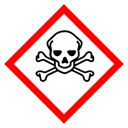 Toxic
GHS06
Toxic
GHS06
-
 Hazardous to the Environment
GHS09
Hazardous to the Environment
GHS09
Declaraciones de peligro
- H302 Nocivo en caso de ingestión.
- H311 Tóxico en contacto con la piel.
- H314 (sub cat. 1C) Provoca quemaduras graves en la piel y lesiones oculares graves.
- H318 Provoca lesiones oculares graves.
- H400 Muy tóxico para los organismos acuáticos.
- H410 Muy tóxico para los organismos acuáticos, con efectos nocivos duraderos.
Declaraciones de precaución
- P260 No respirar el polvo/el humo/el gas/la niebla/los vapores/el aerosol.
- P273 Evitar su liberación al medio ambiente.
- P280 Llevar guantes/prendas/gafas/máscara de protección.
- P301+312 EN CASO DE INGESTIÓN: Llamar a un CENTRO DE TOXICOLOGÍA/médico/... si la persona se encuentra mal.
- P303+361 En caso de contacto con la piel (o el pelo): Quitar inmediatamente toda la ropa contaminada. Enjuagar con agua o ducharse.
- P305+351+338 EN CASO DE CONTACTO CON LOS OJOS: Aclarar cuidadosamente con agua durante varios minutos. Quitar las lentes de contacto, si lleva y resulta fácil. Seguir aclarando.
Documentos
Fichas de Datos de Seguridad (FDS)
Disponible en English, French, German, Italian, Portuguese, Spanish.
Certificado de Análisis (CoA) por lote
Introduzca un número de lote o partida para recuperar el informe de análisis (CoA) correspondiente a esa partida específica. Podemos generar uno a partir de los datos de especificación si no hay ningún PDF disponible.
Sinónimos
No se han registrado nombres alternativos para este producto.
Preguntas frecuentes
¿Para qué se utiliza habitualmente el cloruro de hexadeciltrimetilamonio (CTAC)?
El CTAC se utiliza principalmente como tensioactivo catiónico en suavizantes de tejidos, acondicionadores para el cabello y emulsionantes, así como catalizador de transferencia de fase en síntesis orgánica.
¿Cuál es la fórmula química y el peso molecular del CTAC?
La fórmula es CH₃(CH₂)₁₅N(Cl)(CH₃)₃ y el peso molecular es de 320.0 g/mol.
¿Cómo debe almacenarse el CTAC?
Almacenar a temperatura ambiente en un lugar fresco y seco, alejado de sustancias incompatibles como los oxidantes fuertes.
¿Qué grados de CTAC suministra Molekula?
Molekula suministra CTAC de grado técnico (pureza típicamente ≥98%) para aplicaciones industriales y de laboratorio.
¿Puede Molekula suministrar CTAC en grandes cantidades?
Sí, ofrecemos CTAC en envases a granel (p. ej., bidones de 25 kg, IBC de 1 tonelada) para clientes industriales a gran escala. Contáctenos para obtener presupuestos personalizados.
¿Qué documentación acompaña a un pedido de CTAC?
Cada pedido incluye un certificado de análisis (CoA), una ficha de datos de seguridad (MSDS) y una etiqueta de peligro (palabra de advertencia: Peligro).
¿Listo para realizar un pedido o necesita un paquete personalizado?
Indíquenos el producto, grado y cantidad — Molekula suele responder dentro de un día laboral con precio y plazo de entrega.