Molekula
Podophyllumharz
Podophyllum resin
Belieferung von über 4.500 Kunden in mehr als 80 Ländern
ISO 9001:2015 & ISO 14001:2015 zertifiziert · Lieferant für Laboratorien und Industrie seit 1999 · Die aufgelisteten Packungsgrößen sind ein Ausgangspunkt — wir fertigen, beziehen und konfektionieren nach Ihren Bedarfsmengen.
Podophyllumharz ist ein natürlicher Extrakt, der aus den Wurzeln und Rhizomen von Podophyllum-Pflanzen gewonnen wird und vor allem in der Pharmazie als Ausgangsstoff für Krebstherapeutika wie Etoposid und Teniposid verwendet wird. Darüber hinaus wird es in der Dermatologie zur Behandlung von Warzen und Hautläsionen eingesetzt. Dieses Harz hat die CAS-Nummer 9000-55-9, die Summenformel C88H92O34 und ein Molekulargewicht von 1693.6. Es wird bei Umgebungsbedingungen gelagert, erfordert jedoch aufgrund seiner gefährlichen Eigenschaften, die durch das Signalwort „Gefahr“ gekennzeichnet sind, eine sorgfältige Handhabung. Molekula liefert Podophyllumharz von Forschungs- bis hin zu Großmengen mit vollständiger Dokumentation und Rückverfolgbarkeit gemäß ISO 9001:2015.
Abbildung dient nur zur Veranschaulichung. Weitere Verpackungen und Gebindegrößen sind erhältlich.
Preise und Verpackungsgrößen
Auf Lager — Versand innerhalb von 2 Werktagen
Diese Packgrößen sind keine Begrenzung. Molekula stellt her, bezieht und verpackt nach Bestellung um — falls Sie 500 kg benötigen und nur 1 kg aufgelistet sehen, Wir bieten Angebote von Gramm bis hin zu Mehrtonnen-Mengen.
Benötigen Sie eine andere Größe? Fügen Sie die nächstgelegene Packungsgröße hinzu und ändern Sie diese in Ihrem Warenkorb – wir berechnen den Preis zum gleichen Stückpreis.
-
25 g — €135.00 pro Packung
Benötigen Sie eine andere Menge oder Verpackung?
Teilen Sie uns mit, welche Mengen Sie benötigen und wann — ob Fässer, IBCs, Säcke oder eine einmalige Großlieferung. Wir produzieren oder beschaffen das Produkt und unterbreiten Ihnen ein Angebot.
Preise verstehen sich zzgl. MwSt./Umsatzsteuer und ohne Versandkosten.
Spezifikationen
| Property | Value |
|---|---|
| Appearance | Light brown amorphous powder |
| Ash | ≤1.0% |
| Heavy metals | ≤10 ppm |
| Total plate count | ≤1000 cfu/g |
| Salmonella | Negative |
| Loss on Drying | ≤5.0% |
| Odour | Characteristic |
| Assay | Podophyllum Resin ≥50% |
| Bulk density | 0.4-0.6 g/cm3 |
| Staphylococcus aureus | Negative |
| Lead (Pb) | ≤2 ppm |
| Arsenic (As) | ≤2 ppm |
| Identification (TLC) | Conforms |
| E. Coli | Negative |
| Mould & Yeast | ≤100 cfu/g |
| Caustic | Characteristic |
| Solubility in 96% ethanol | Insoluble |
| Solubility in 5M ammonia | Insoluble |
| Pesticide residue- 666 | <0.2 ppm |
| Pesticide residue- DDT | <0.2 ppm |
Lagerung und Handhabung
| Property | Value |
|---|---|
| Lagertemperatur | Ambient |
| Transportklasse | 6.1 (8) |
| Verpackungsgruppe | II |
| Säuregehalt | Neutral |
Identifizierung
| Property | Value |
|---|---|
| SKU | 90038343 |
| CAS-Nummer | 9000-55-9 |
| IUPAC-Name | bis(8-hydroxy-7-(hydroxymethyl)-5-(3,4,5-trimethoxyphenyl)-5,6,7,8-tetrahydrobenzo[f][1,3]benzodioxole-6-carboxylic acid);bis(5-hydroxy-9-(3,4,5-trimethoxyphenyl)-5a,6,8a,9-tetrahydro-5H-[2]benzofuro[5,6-f][1,3]benzodioxol-8-one) |
| Molekülformel | C88H92O34 |
| Molekulargewicht | 1693.6 |
| Exakte Masse | 1692.547 |
| SMILES | COC1=CC(=CC(=C1OC)OC)C2C3C(COC3=O)C(C4=CC5=C(C=C24)OCO5)O.COC1=CC(=CC(=C1OC)OC)C2C3C(COC3=O)C(C4=CC5=C(C=C24)OCO5)O.COC1=CC(=CC(=C1OC)OC)C2C(C(C(C3=CC4=C(C=C23)OCO4)O)CO)C(=O)O.COC1=CC(=CC(=C1OC)OC)C2C(C(C(C3=CC4=C(C=C23)OCO4)O)CO)C(=O)O |
| InChIKey | KOUZYZCESNTXJO-UHFFFAOYSA-N |
| InChI | InChI=1S/2C22H24O9.2C22H22O8/c2*1-27-16-4-10(5-17(28-2)21(16)29-3)18-11-6-14-15(31-9-30-14)7-12(11)20(24)13(8-23)19(18)22(25)26;2*1-25-16-4-10(5-17(26-2)21(16)27-3)18-11-6-14-15(30-9-29-14)7-12(11)20(23)13-8-28-22(24)19(13)18/h2*4-7,13,18-20,23-24H,8-9H2,1-3H3,(H,25,26);2*4-7,13,18-20,23H,8-9H2,1-3H3 |
| PubChem CID | 11979494 |
| UN-Nummer | UN2928 |
| REACH-Code | Y110 |
| HTS-Code | 2932.20.2000 |
| Zolltarifnummer | 2932209090 |
Sicherheit & GHS
-
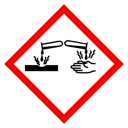 Corrosive
GHS05
Corrosive
GHS05
-
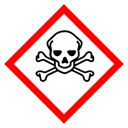 Toxic
GHS06
Toxic
GHS06
-
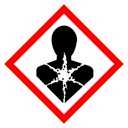 Serious Health Hazard
GHS08
Serious Health Hazard
GHS08
Gefahrenhinweise
- H301 Giftig bei Verschlucken.
- H310 Lebensgefahr bei Hautkontakt.
- H314 (sub cat. 1B) Verursacht schwere Verätzungen der Haut und schwere Augenschäden.
- H330 Lebensgefahr bei Einatmen.
- H360 Kann die Fruchtbarkeit beeinträchtigen oder das Kind im Mutterleib schädigen (konkrete Wirkung angeben, sofern bekannt) (Expositionsweg angeben, sofern schlüssig belegt ist, dass die Gefahr bei keinem anderen Expositionsweg besteht).
Vorsichtsmaßnahmen
- P260 Staub / Rauch / Gas / Nebel / Dampf / Aerosol nicht einatmen.
- P263 Berührung während der Schwangerschaft und Stillzeit vermeiden.
- P280 Schutzhandschuhe / Schutzkleidung / Augenschutz / Gesichtsschutz tragen.
- P301+P310 Bei Verschlucken: Sofort Giftinformationszentrum, Arzt oder … anrufen.
- P302+P352 Bei Berührung mit der Haut: Mit viel Wasser / … waschen.
- P304+312 Bei Einatmung: Bei Unwohlsein einen Giftinformationszentrum oder Arzt/Ärztin kontaktieren.
Dokumente
Zertifikat der Analyse (CoA) nach Charge
Geben Sie eine Chargen- oder Seriennummer ein, um die CoA für diese spezifische Charge abzurufen. Wir können eine erstellen, wenn keine PDF-Datei vorliegt, basierend auf den Spezifikationsdaten.
Synonyme
- KOUZYZCESNTXJO-UHFFFAOYSA-N
- Mayapple Extract
- Podocon 25
- Podoph
- Podoph co
- PODOPHYLLIN
- Podophyllin Resin
- Podophyllin resin - from Podophyllum emodii
- Resin, Podophyllum
Häufig gestellte Fragen
Wofür wird Podophyllum-Harz üblicherweise verwendet?
Podophyllum-Harz wird hauptsächlich als Ausgangsmaterial für die Halbsynthese von Etoposid und Teniposid verwendet. Beide sind Chemotherapeutika zur Behandlung von Krebserkrankungen wie Hodenkrebs, Lungenkrebs und Lymphomen.
Wie lauten die chemische Formel und das Molekulargewicht von Podophyllum-Harz?
Die chemische Formel lautet C₈₈H₉₂O₃₄, und das Molekulargewicht beträgt 1693.6 g/mol.
Wie sollte Podophyllum-Harz gelagert werden?
In einem dicht verschlossenen Behälter bei Umgebungstemperatur lagern, geschützt vor Feuchtigkeit und direktem Sonnenlicht.
Welche Qualitäten oder Reinheitsgrade von Podophyllum-Harz liefert Molekula?
Podophyllum-Harz (Podophyllin) ist ein harzartiger Rohextrakt, der ein Gemisch aus Lignanen und anderen Bestandteilen enthält. Sein Gehalt an Podophyllotoxin variiert daher je nach Ursprungsart und beträgt typischerweise etwa 20 % bei P. peltatum und bis zu etwa 40–50 % bei P. emodi (genaue Spezifikationen auf Anfrage erhältlich).
Kann Molekula Podophyllum-Harz in großen Mengen liefern?
Ja, Molekula kann Podophyllum-Harz in großen Mengen liefern (Mindestbestellmengen variieren; kontaktieren Sie uns für Preise und Verfügbarkeit).
Welche Dokumentation liegt einer Bestellung von Podophyllum-Harz bei?
Jeder Bestellung liegen ein Analysenzertifikat (CoA), ein Materialsicherheitsdatenblatt (MSDS) sowie chargenspezifische Unterlagen zur Rückverfolgbarkeit bei.
Bereit zum Bestellen oder benötigen Sie ein Sonderpack?
Teilen Sie uns das Produkt, die Reinheitsstufe und die Menge mit — Molekula antwortet in der Regel innerhalb eines Werktages mit Preis und Lieferzeit.